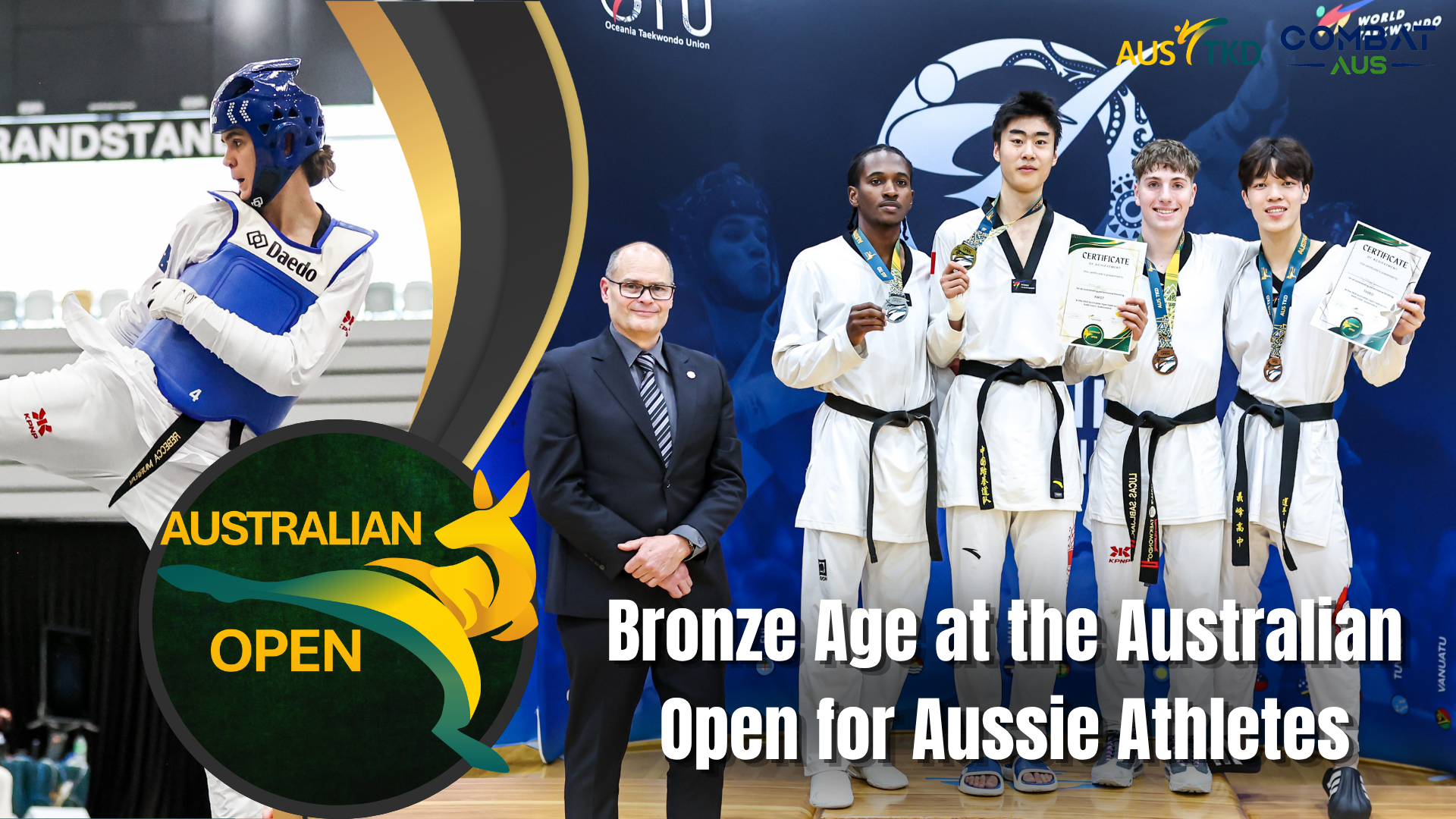
Australia produced a great return at the 2026 Australian Open, with eight athletes winning bronze across the senior divisions. The competition running through the 20-21 June on the Gold Coast in a major statement for the national program at G-2 level.
Australia secured eight bronze medals at the 2026 Australian Open, with the performances of Stacey Hymer (F-57kg), Gaby Blewitt (F-62kg), Rose Abela (F-67kg), Rebecca Murray (F-73kg), Reba Stewart (F+73kg), Aaron Choy (M-63kg), Lucas Sabljak (M-68kg) and Aiden Stilley (M+87kg).
While the Australian campaign was not able to have anyone break through to the gold medal match, there was a number of strong podium performances at G-2 level and provided an important platform to continue building toward the next stage of these athletes' international careers. Being able to do well on home soil is an important, particularly at an event like the Australian Open which shares the weekend with the G-3 WT President's Cup Oceania. Across the tournament, the Australian medallists showed quality, resilience and the capacity to remain in contention deep into their divisions, while also leaving with a clear sense of what is required to take the next step.
Stacey Hymer claimed bronze in the Women’s -57kg division, adding another international medal to a career built on consistency at the top level. As one of Australia’s most experienced athletes, Hymer’s result again demonstrated her ability to perform in big competitions. Hymer came back well after not quite being at the level she wanted to be at the WT President's Cup, taking down the 3rd-seeded Russian in her opening bout. She lost her semi-final to the eventual Gold Medalist from Chinese Taipei 2-1 in a fight that could have gone either way.
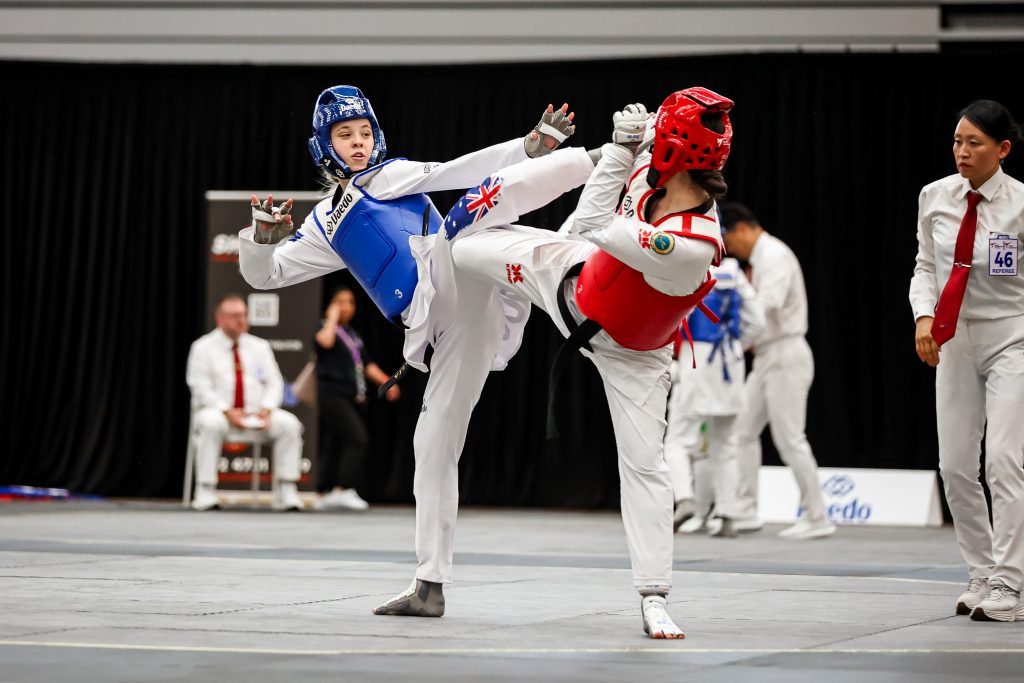
In the Women’s -62kg division, Gaby Blewitt continued her great run of form over the past 12 months, doubling up on bronze medals over the weekend. Still early in her senior career, Blewitt continues to build an impressive resume at international level. Coming into the competition as the 1 seed she was straight through to the quarters, where she faced fellow Australian Sophie Otter. Going up against the same opponent from Chinese Taipei that she faced in the President's Cup, Gaby looked much improved with a clear plan of attack. It started great, but ran out of steam in the third round where her opponent was able to edge her out of it this time.
Rose Abela from Heart Taekwondo in Melbourne delivered one of the most notable performances of the event in the Women’s -67kg division, securing bronze as one of three Australian club athletes not In the NPC to reach the podium. Abela was selected to represent Australia at the 2025 World Taekwondo Championships, and is starting to build a name for herself within Australian Taekwondo circles. Abela was fantastic in her first fight against Chinese Taipei, before going down to the Jordanian in the bronze medal match. It was a performance to be recognised and respected, and one that also provides a foundation to keep building toward breakthrough results at this level.
In the Women’s -73kg category, Rebecca Murray added to Australia’s medal count with a composed bronze medal finish, a result she also achieved WT President's Cup two days prior. In a hard fought first round against Chinese Taipei, Murray showed her class and fought her way to a 2-1 victory. Her Opponent from Saudi Arabia was too good on the day and took the semi-final 2-0. As with many Australian athletes across the event, the result was both an achievement in itself and a reminder of the importance of continuing the process toward semi-finals, finals and championship-winning performances.
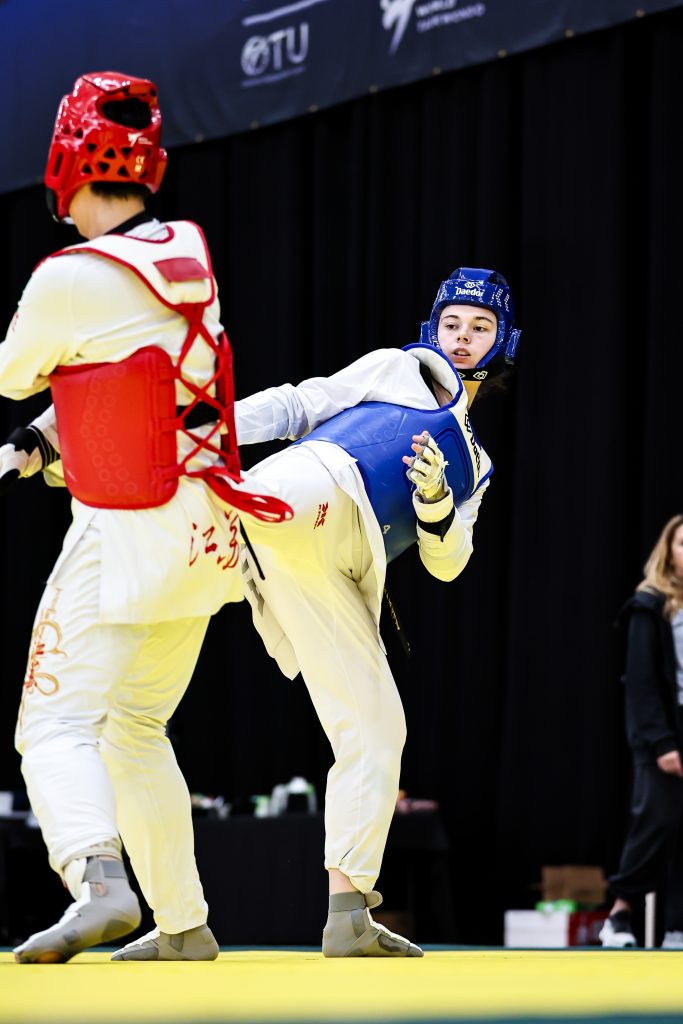
Reba Stewart brought her trademark experience and composure to the Women’s +73kg division, coming back from a difficult few months from injury. The Lauren Burns' Medalist from 2025 remains one of the program’s most respected senior athletes, and another podium finish at this level is a strong outcome. After winning 2-0 against Canada, it was a game of patience in her semi-final. Losing the first round 1-0 with a singular Gam-Jeom, and a 0-0 Superiority second round, Stewart was exactly where she wanted to be. The American was able to readjust In the third to barely hang on. A great effort from an athlete of her calibre, however, the ambition is always larger and she will be back for the next one.
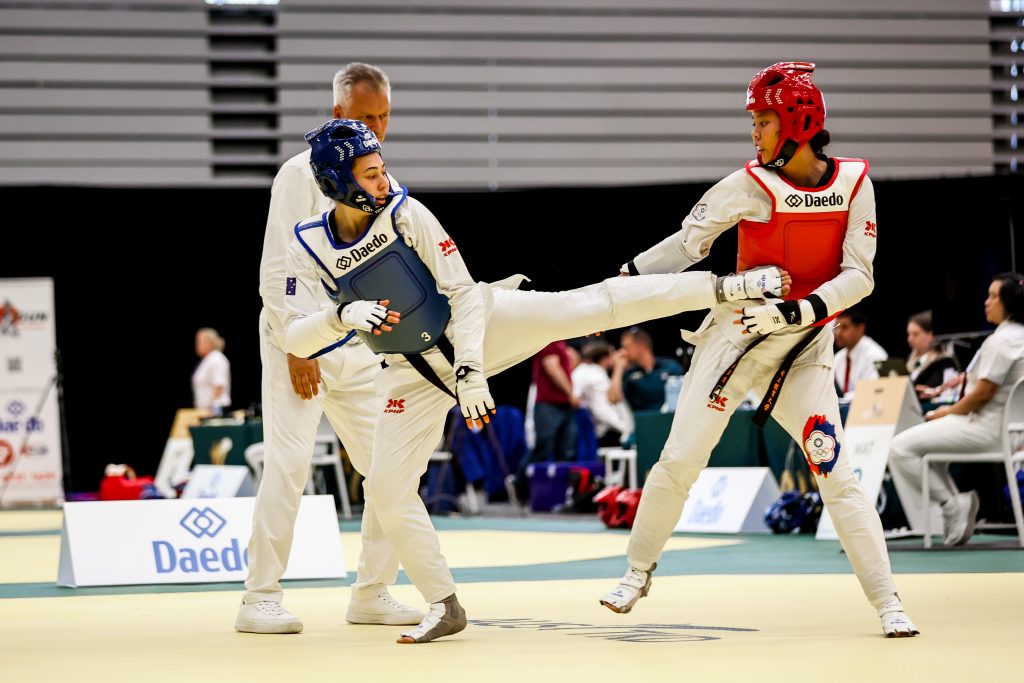
On the men’s side, Aaron Choy from Forza Taekwondo claimed bronze in the Men’s -63kg division in a result that stood out within the wider Australian campaign. As a non-centralised athlete, Choy’s medal highlighted the quality being developed beyond the daily national training environment and reinforced the role of the club system in producing athletes capable of succeeding on the international stage. Winning 2 fights to get to the semi-final, beating Brazil 2-0 and New Zealand 2-1, he put up a noble effort in the final against Japan. It was an excellent achievement, and one that can now serve as a springboard for Aaron to take his talents to the next step.
Lucas Sabljak also reached the podium with bronze in the Men’s -68kg division, delivering another important result for another one of Australia’s club-based athletes. The Hall's Taekwondo fighter's performance reflected discipline and competitive maturity in a strong field. Sabljak was solid winning 2-0 against Tonga, before a 2-1 victory against the 2nd-seeded Jordanian. Sabljak was competitive in the semi, but was no match for the ultimate gold medalist from China. It showed that Australian athletes across the system are capable of contending at G-2 events, while also pointing toward the opportunity to keep building and push beyond the semi-final barrier.
In the Men’s +87kg division, Aiden Stilley rounded out Australia’s bronze medal winners with a solid result against quality opposition. Facing the same opponents as the WT President's Cup, Stilley Made light work of his quarterfinal matchup. Tested against the same Russian from Thursday's Competition, Stilley showed much improvement and a clear plan on how he was going to amend the mistakes he make the few days prior. In spite of this, the Russian proved more disciplined and got the win. Stilley's performance was enough to go back to back bronze medals at these events. And will look to build on this in future competitions.
Australian Taekwondo also acknowledges the support of the Australian Sports Commission, the Australian Institute of Sport, the Victorian Institute of Sport and Combat Australia for their continued backing of the Australian National Performance Program and developing taekwondo In Australia.
Eight bronze medals at the Australian Open represented strength in a local G-2 environment. More importantly, they provided eight examples of athletes who are firmly in the fight, on the podium, and continuing to build toward the next step. The result was one of progress, and of a group determined to turn strong processes into even stronger outcomes in the events ahead.